Slow-Cooked Beef Brisket with Onions
A covered oven braise turns beef brisket and a generous layer of onions into a tender roast with a savoury pan sauce. Slice across the grain for pieces that are easy to serve.

Rather eat it out? See restaurants near you that serve slow-cooked beef brisket.
📍 Find it near me ↗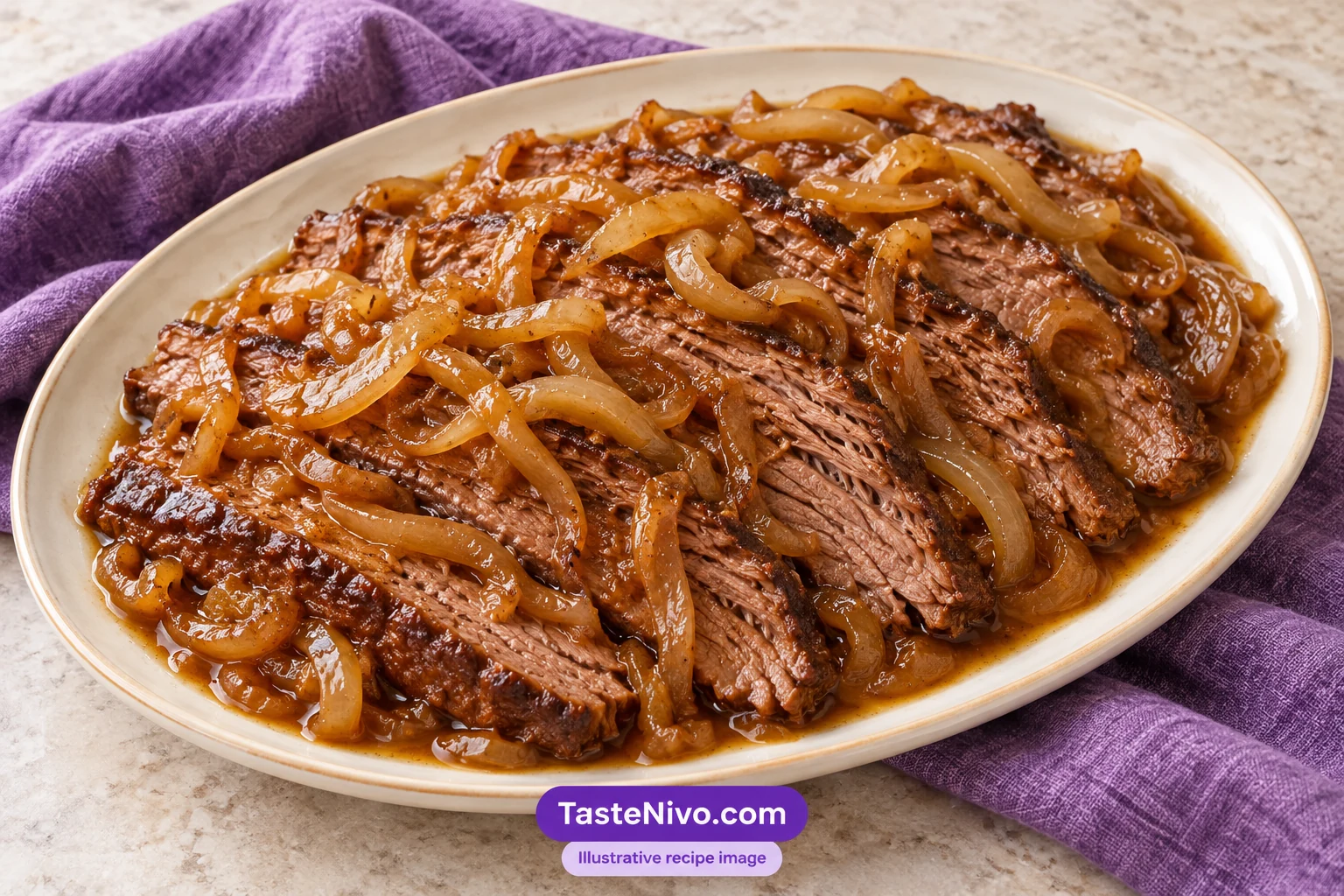
Slow-Cooked Beef Brisket with Onions
Ingredients
Equipment
Method
- Heat oven to 150°C (300°F). Note the direction of the brisket grain before cooking. Pat meat dry and season with salt and pepper. Heat oil in a large Dutch oven over medium-high heat and brown brisket for 4 to 5 minutes per side. Transfer to a tray.
- Add onions to the pot and cook over medium heat for 12 to 15 minutes, stirring, until softened and lightly golden. Add garlic and tomato paste; cook 1 minute.
- Stir in stock, Worcestershire sauce, vinegar, thyme and bay leaves, scraping up browned bits. Set brisket fat-side up on the onions. Liquid should reach roughly halfway up the meat; add stock if needed. Bring to a simmer and cover tightly.
- Cook in the oven for 4 to 4½ hours, turning the brisket after 2 hours and returning it fat-side up for the last hour. Check the liquid occasionally and replenish if needed. The brisket is ready when a fork or probe slides into the thickest part with little resistance; a clock alone is not a reliable doneness test.
- Transfer brisket to a board and cover loosely; rest 20 minutes. Remove bay leaves, skim excess fat from the sauce and simmer uncovered for 10 to 15 minutes if it needs reducing. Keep the onions in the sauce.
- Slice the brisket thinly across the grain identified earlier. Return slices to the warm onion sauce briefly, then divide into 8 servings. Spoon onions and sauce over the meat.
Notes
MAKE THE MEAL YOURS
Shopping & recipe cost
Shopping list & recipe cost
Planning for 8 servings.
Change yield with the recipe card controls ↑. This planner follows those controls. Quantities written in the method describe the original batch; adjust them too. Cooking time does not multiply.
Tick ingredients you already have to leave them off the shopping list. Ingredient costs still include them. Enter your own pack prices in CAD; no store prices are fetched.
Enter pack prices and amounts to estimate the ingredient cost.
Use the same unit and preparation for pack amount and amount used. For drained ingredients, use the usable drained pack amount. Changing between weight and volume requires your own measured quantity. Excludes energy, travel, taxes, sides and extra ingredients mentioned only in notes.
Prefer to eat out?
No menu-verified restaurant match is recorded for this recipe yet. Browse the restaurant guide.
Saved recipes & shopping list → Meals with shared ingredients →
Recipe by TasteNivo. See our editorial method for recipe preparation and illustrative image notes.
KEEP EXPLORING
Everyday main dishes
Browse the Meat Recipes collection, or try:
For the equipment used in this kind of cooking, see Choosing a cooking pot.