Cooking Tools · Choose with purpose
Choose the tool for the job.
Practical guides to kitchen equipment: compare useful features, find the right fit for your recipes and understand everyday care.

Frying pans
A frying pan should fit your food, hob and handling preferences. Diameter, coating and material labels matter, but none can choose the pan on…
Read the equipment guide →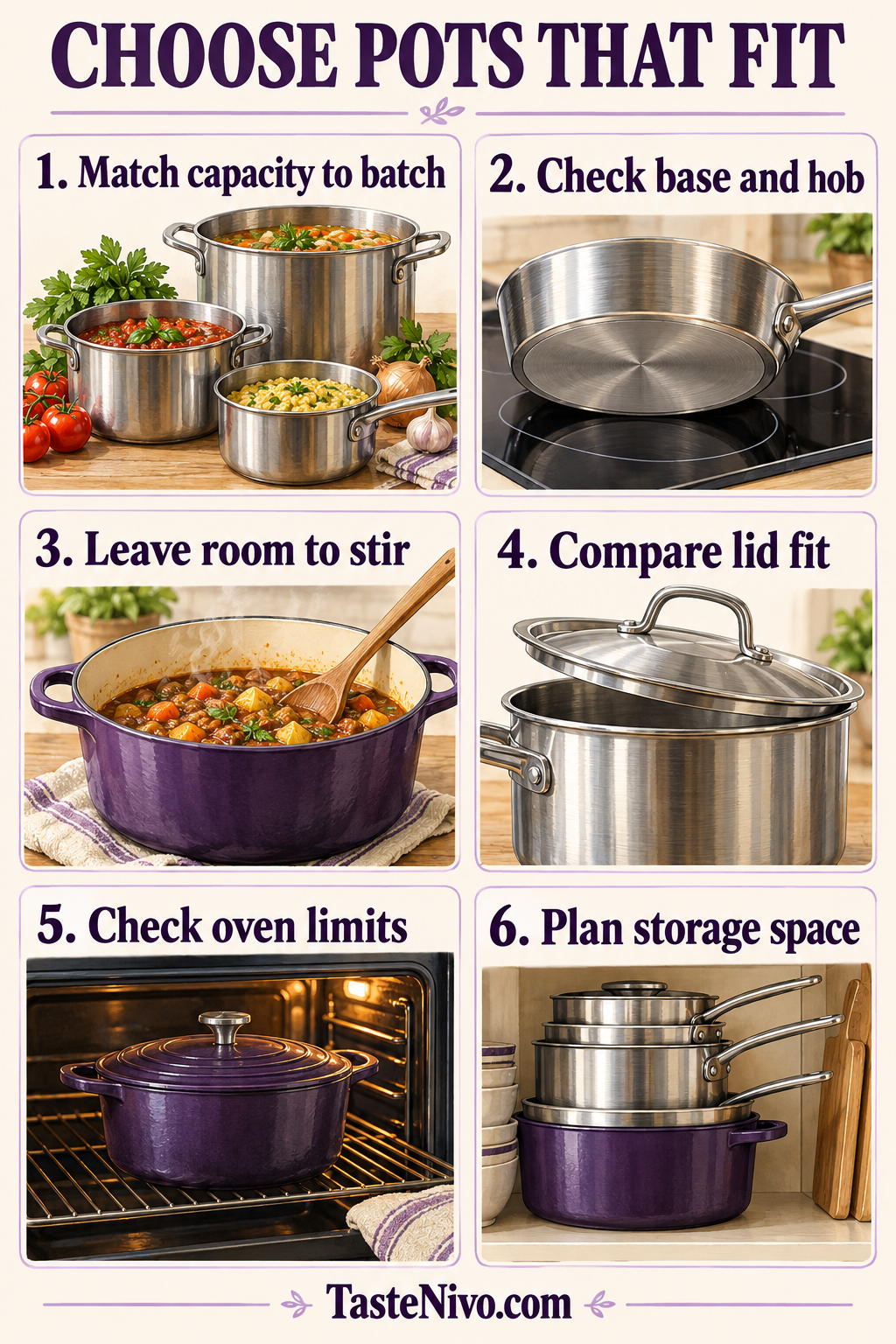
Cooking pots
A useful pot fits the batch, the burner and the way you stir, drain and serve. A capacity printed on a box describes how…
Read the equipment guide →
Baking trays
A baking tray affects more than whether food fits inside the oven. Its usable area, rim, material, finish and lining change how ingredients sit,…
Read the equipment guide →
Kitchen scales
A useful kitchen scale should read the quantities you actually measure, hold the bowl you use and remain easy to see while ingredients are…
Read the equipment guide →
Measuring cups & spoons
Measuring tools are useful when their markings, shape and method match the recipe. A familiar-looking cup is not automatically the same quantity as another…
Read the equipment guide →
Blenders
Choose a blender around the mixtures you actually make, not the largest power figure on the box. A small drink, a thick dip and…
Read the equipment guide →
Strainers & colanders
A strainer should retain the ingredient you want while allowing the unwanted liquid or finer material to pass. Capacity, opening size, support and cleaning…
Read the equipment guide →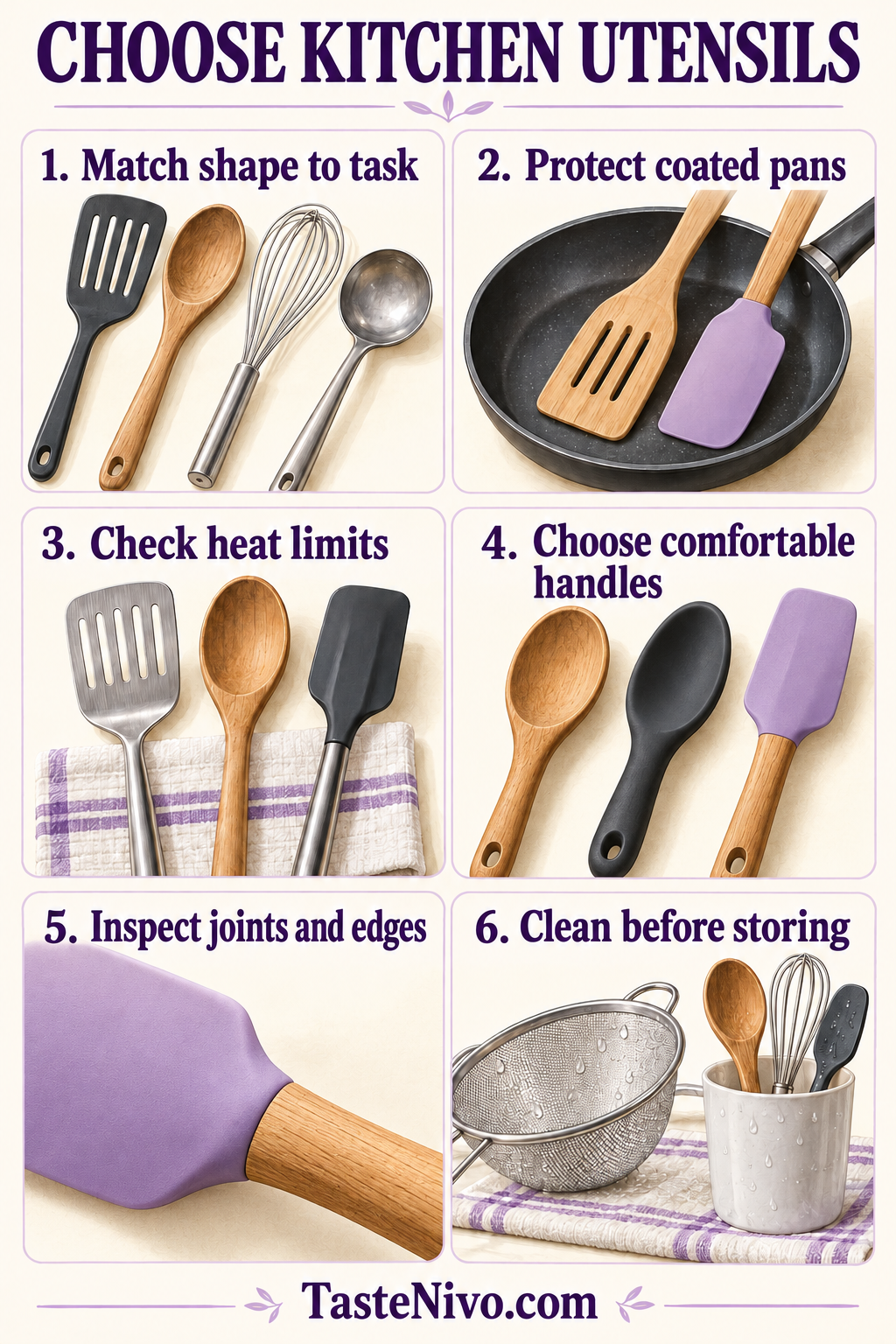
Mixing & serving utensils
A useful utensil matches a repeated movement: folding batter, turning a pancake, stirring a sauce or lifting food from liquid. Material matters, but shape,…
Read the equipment guide →
Mixing bowls
A mixing bowl needs enough room for the movement as well as the ingredients. A bowl that holds a batter to the rim may…
Read the equipment guide →
Oven mitts
Oven mitts should suit the cookware you handle and the movements required to move it. A large temperature number on packaging does not describe…
Read the equipment guide →