Sesame Udon with Roasted Eggplant
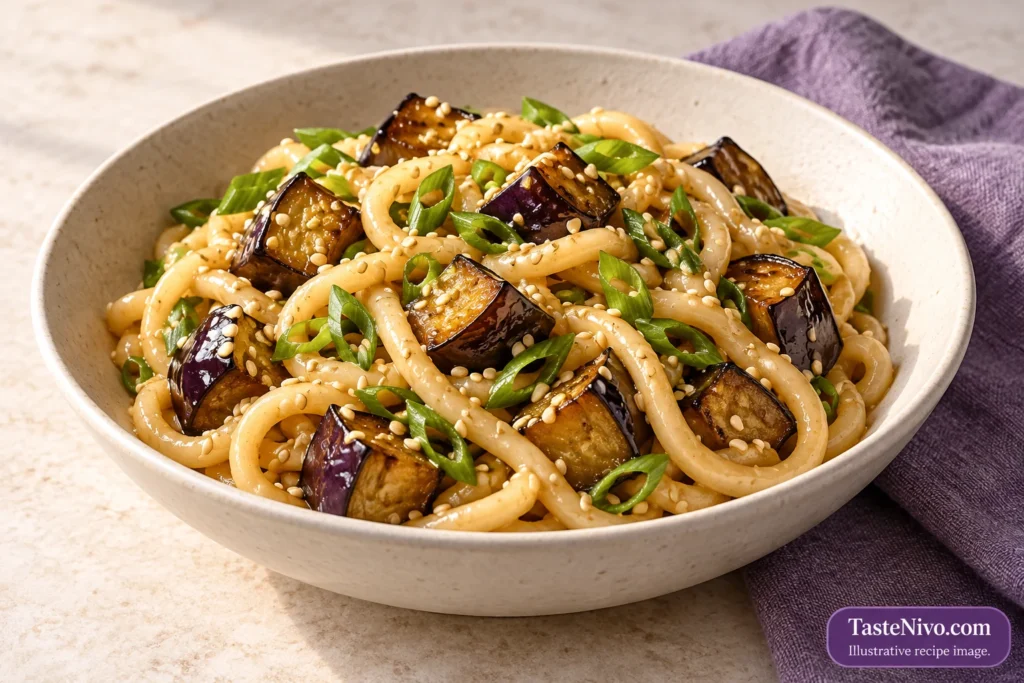
Roasted eggplant and chewy udon noodles are coated in a sesame sauce. Mixing the sauce separately keeps the tahini smooth when it meets the warm noodles.
Rather eat it out? See restaurants near you that serve sesame udon.
📍 Find it near me ↗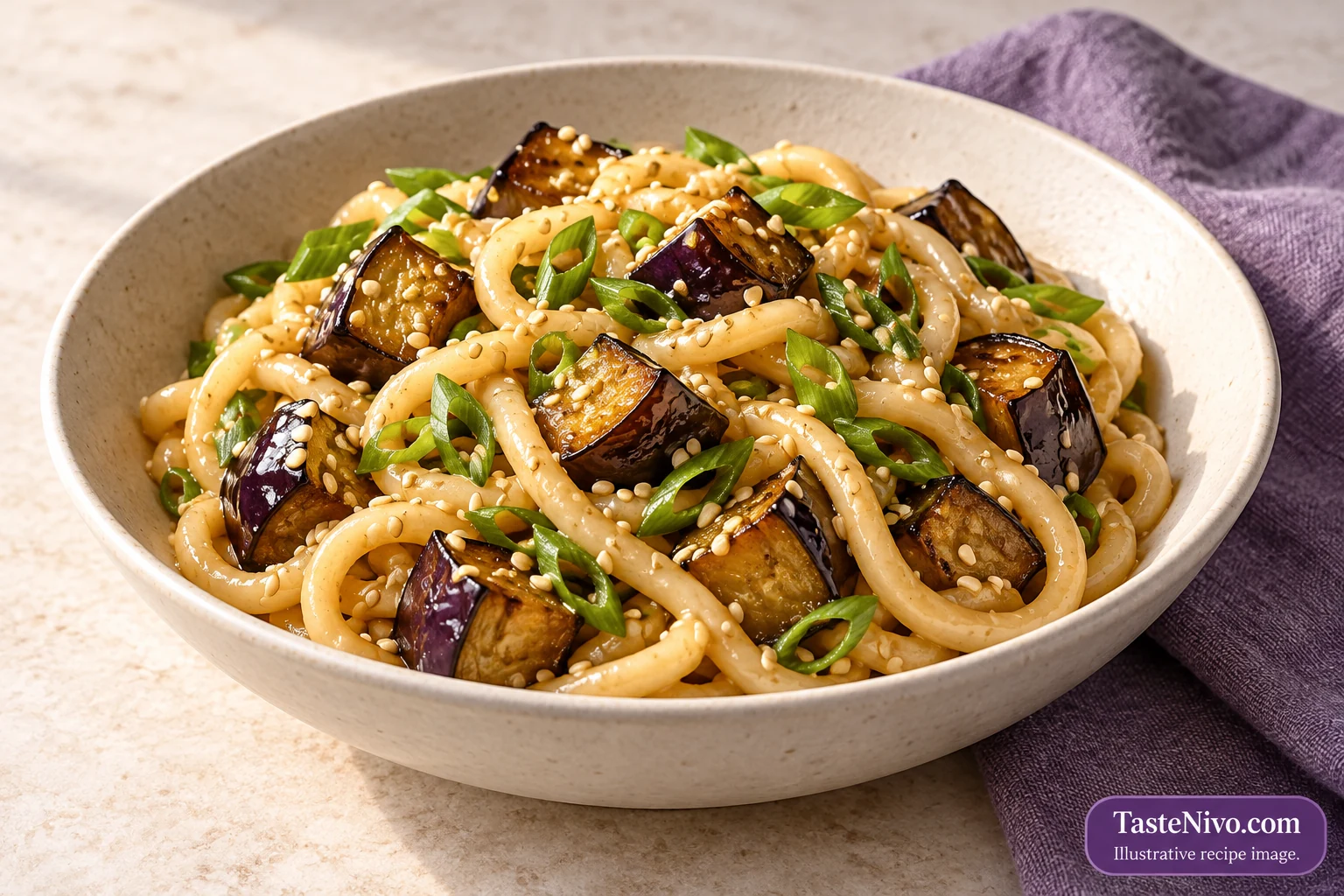
Sesame Udon with Roasted Eggplant
Ingredients
Equipment
Method
- Heat oven to 220°C (425°F). Toss eggplant with neutral oil on a lined tray. Roast 25 to 30 minutes, turning once, until golden and soft.
- Whisk tahini, soy sauce, vinegar, maple syrup, sesame oil and ginger. Gradually whisk in warm water until smooth and pourable.
- Prepare udon according to the package, usually loosening in boiling water for 1 to 2 minutes. Drain thoroughly.
- Toss warm noodles with sauce and roasted eggplant. Divide among 4 bowls and scatter scallions and sesame seeds over top.
Notes
MAKE THE MEAL YOURS
Shopping & recipe cost
Shopping list & recipe cost
Planning for 4 servings.
Change yield with the recipe card controls ↑. This planner follows those controls. Quantities written in the method describe the original batch; adjust them too. Cooking time does not multiply.
Tick ingredients you already have to leave them off the shopping list. Ingredient costs still include them. Enter your own pack prices in CAD; no store prices are fetched.
Enter pack prices and amounts to estimate the ingredient cost.
Use the same unit and preparation for pack amount and amount used. For drained ingredients, use the usable drained pack amount. Changing between weight and volume requires your own measured quantity. Excludes energy, travel, taxes, sides and extra ingredients mentioned only in notes.
Prefer to eat out?
No menu-verified restaurant match is recorded for this recipe yet. Browse the restaurant guide.
Saved recipes & shopping list → Meals with shared ingredients →
Recipe by TasteNivo. See our editorial method for recipe preparation and illustrative image notes.
KEEP EXPLORING
Noodles
Browse the Pasta & Rice collection, or try:
For the equipment used in this kind of cooking, see Strainers and colanders.