Ingredients
Equipment
Method
- Rinse grape leaves thoroughly. If very salty or firm, soak in hot water for 10 minutes, then drain and pat dry. Trim tough stems. Reserve torn or extra leaves for lining the pan.
- Heat 30 mL oil in a frying pan over medium heat. Cook onion for 5 minutes until soft. Stir in rice, then add 200 mL water. Cover and cook gently for about 8 minutes until the liquid is mostly absorbed; the rice will still be partly cooked. Remove from heat and stir in herbs, 30 mL lemon juice, salt and pepper. Let cool enough to handle.
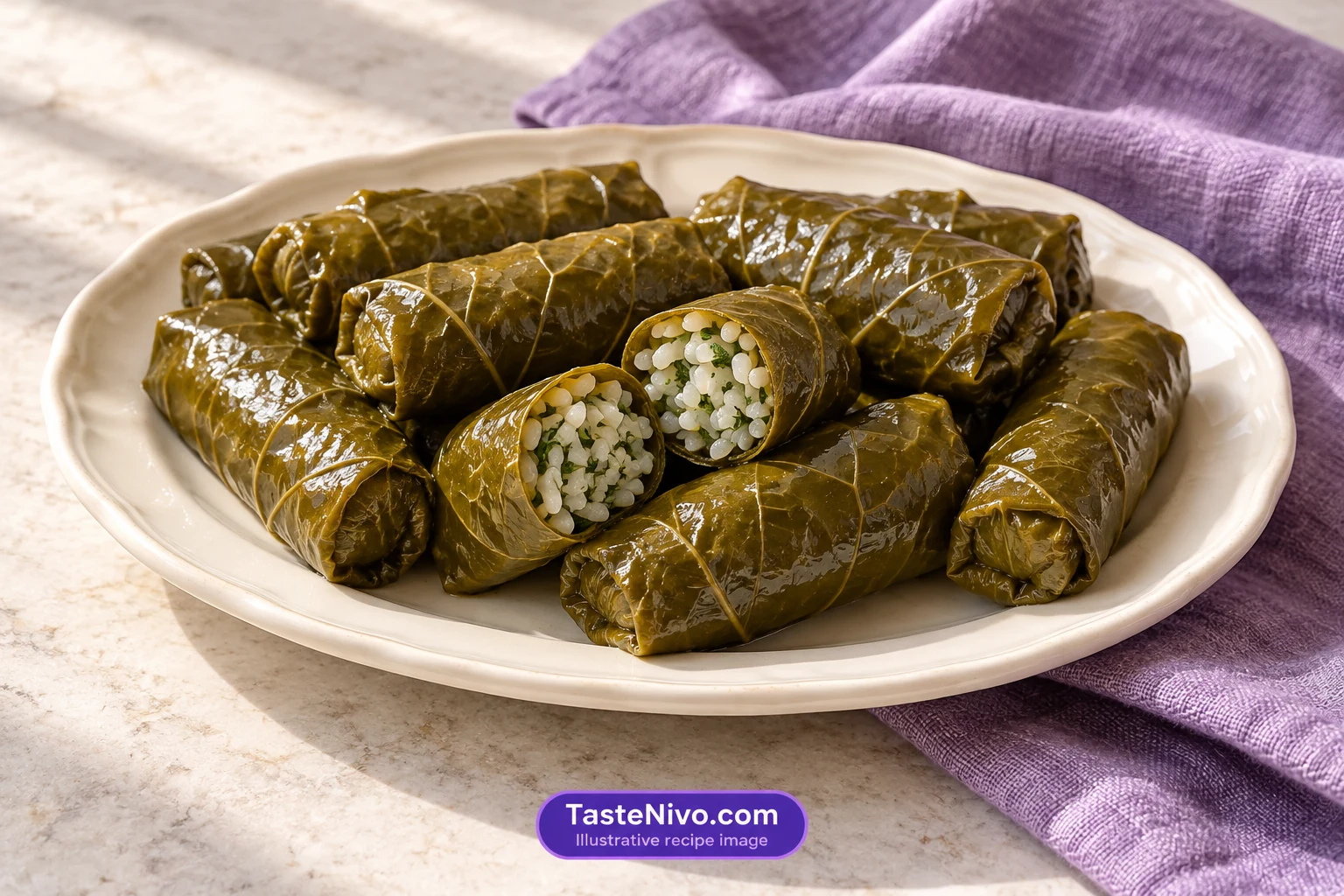
- Lay one leaf vein side up with the stem end towards you. Add a scant tablespoon of filling near that end, adjusting for leaf size. Fold the lower edge over the filling, fold in the sides and roll snugly without squeezing tight, leaving room for the rice to expand. Make about 36 rolls.
- Line the base of a wide saucepan with the reserved leaves. Pack the rolls seam side down in close layers. Pour over remaining oil, lemon juice and 450 mL water; add a little more water if needed to reach almost to the top of the rolls.
- Place a heatproof plate over the rolls to hold them in place. Bring to a gentle simmer, cover and cook on low for about 45 minutes. Check the liquid occasionally and add a little boiling water if the pan is drying out. Test one roll: both leaf and rice should be tender; cook longer if needed.
- Turn off the heat and let stand, covered, for 20 minutes. Carefully remove the hot plate and lift out the rolls. Serve about 6 per portion, warm or cool. Refrigerate promptly within 2 hours rather than leaving cooked rice at room temperature.
Notes
Storage: Cool leftovers in shallow containers and refrigerate within 2 hours at 4°C (40°F) or colder. Use within 2 to 3 days or freeze promptly. Reheat only the portion needed to at least 74°C (165°F), checking the centre with a food thermometer. Discard reheated leftovers that remain uneaten.
Metric weights are primary. 1 tbsp = 15 mL; 1 tsp = 5 mL. Times are estimates; follow the texture and doneness cues in the instructions.
Scaling: The serving controls scale the ingredient list. Any quantities written in the method describe the base batch; adjust those quantities by the same factor. Keep piece sizes and cooking temperatures unchanged, use extra pans or cook in batches as needed, and check doneness rather than multiplying the cooking time.