Ingredients
Equipment
Method
- Heat oil in a heavy casserole. Brown chicken for 6 minutes, turning once. Transfer to a plate.
- Cook onion, mushrooms and pepper in the pan for 8 minutes. Add garlic for 1 minute. Pour in wine and simmer 3 minutes, scraping the base. Add tomatoes, oregano, half the salt and pepper.
- Return chicken and juices. Cover loosely and simmer 35 to 40 minutes until tender and the thickest meat reaches 74°C (165°F) without touching bone.
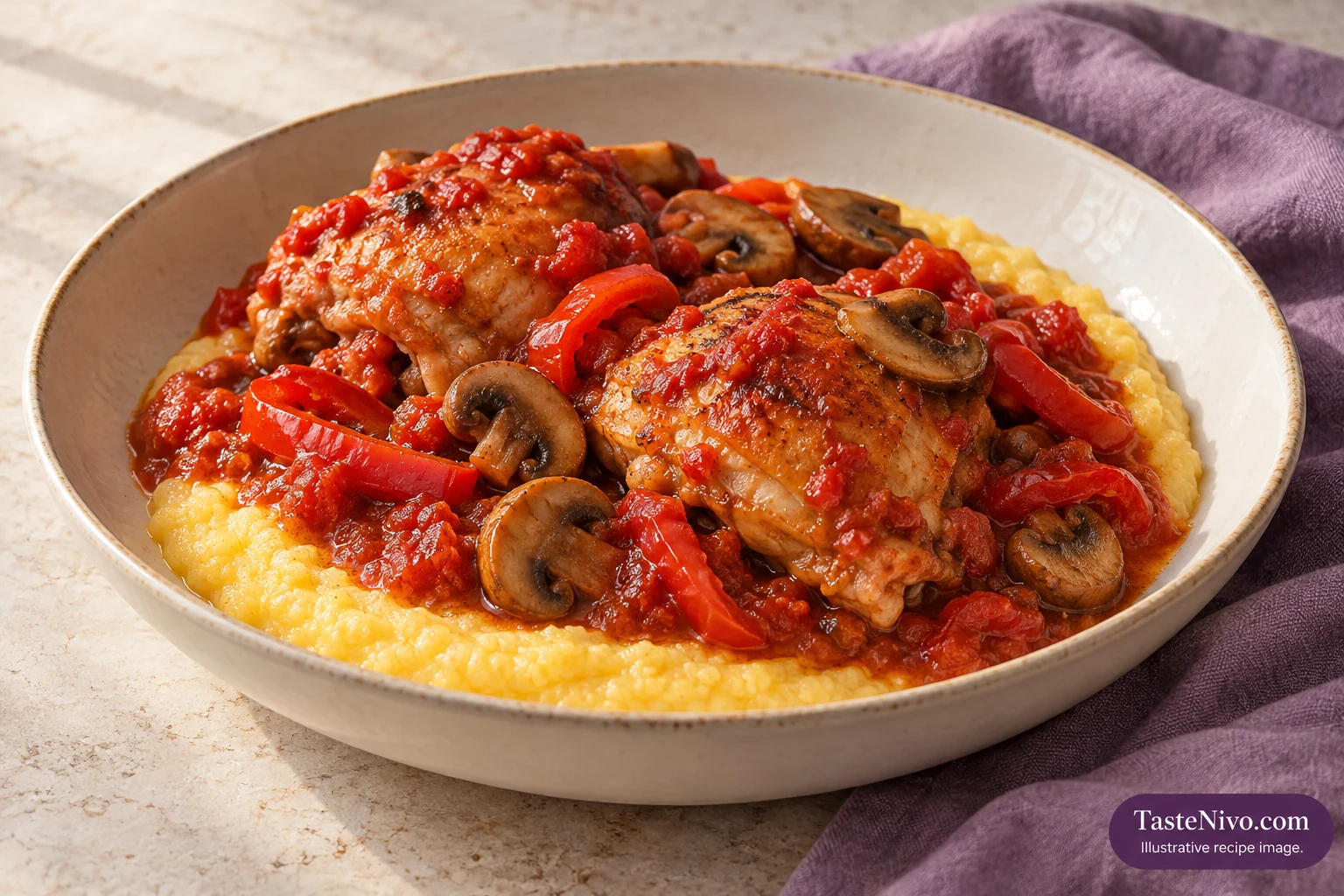
- Meanwhile bring water and remaining salt to a simmer in another saucepan. Whisk in cornmeal slowly. Cook over low heat 35 to 40 minutes, stirring frequently, until creamy and tender; add hot water if needed. Stir in butter and Parmesan. Divide polenta among 4 bowls and top with chicken and sauce.
Notes
Storage: Cool leftovers in shallow containers and refrigerate within 2 hours at 4°C (40°F) or colder. Use within 2 to 3 days or freeze promptly. Reheat only the portion needed to at least 74°C (165°F), checking the centre with a food thermometer. Discard reheated leftovers that remain uneaten.
Metric weights are primary. 1 tbsp = 15 mL; 1 tsp = 5 mL. Times are estimates; follow the texture and doneness cues in the instructions.
Scaling: Scale method quantities with the ingredient multiplier. Use extra pans or batches as needed; keep piece sizes and temperatures unchanged. Cooking times do not scale directly.