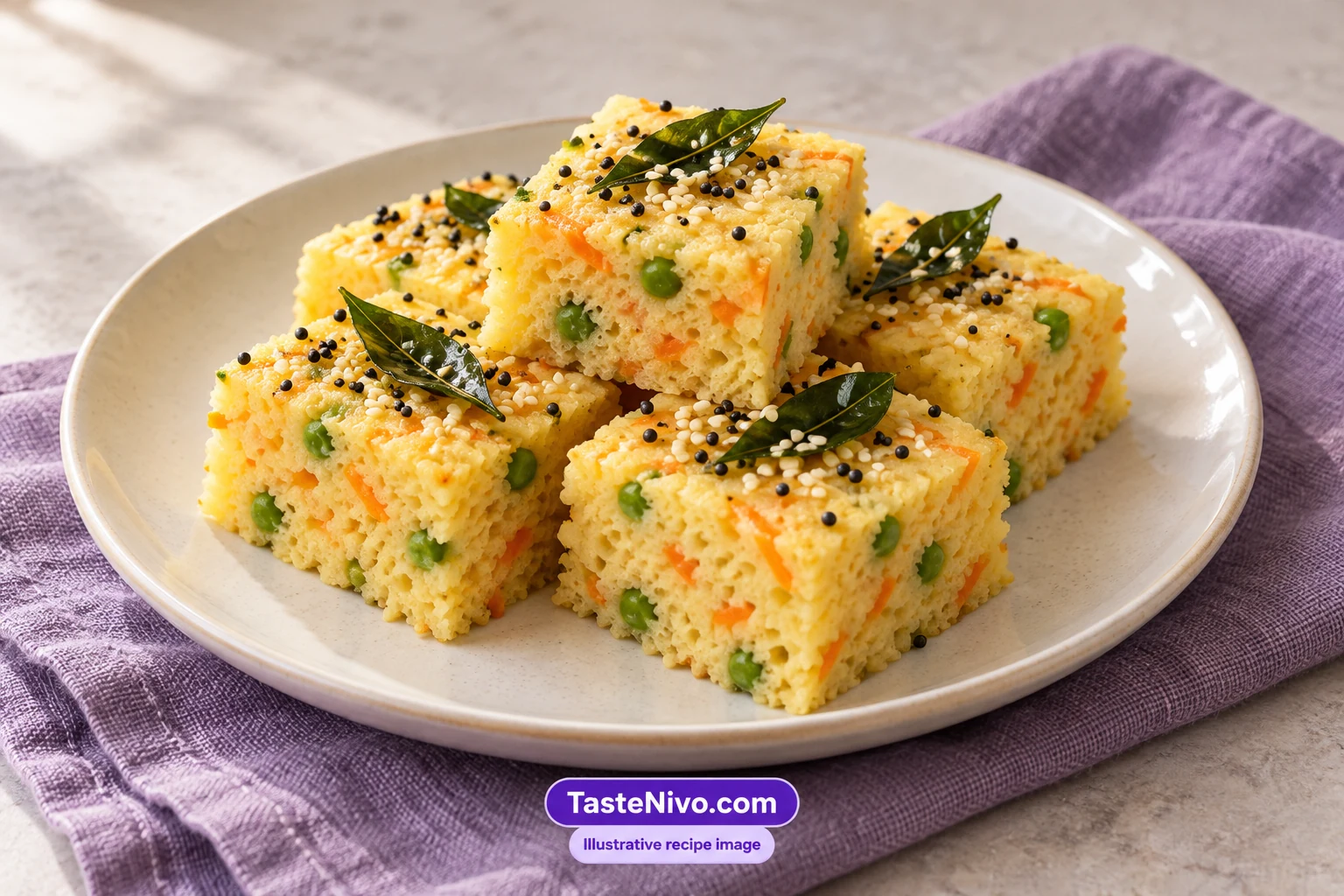
Ingredients
Equipment
Method
- Grease a 20 cm round, deep cake tin that fits in a lidded steamer. Add enough water below the rack to steam for about 20 minutes without touching the tin, and begin heating it.
- Whisk chickpea flour, semolina, yogurt, 150 mL water, 15 mL oil, 15 mL lemon juice, sugar, salt and turmeric until smooth. Fold in carrot and peas. Rest for 10 minutes. The batter should pour thickly; add a little water if it is too stiff.
- Check that the steamer is producing steady steam. Sprinkle fruit salt over the batter and fold in quickly and evenly with a few strokes. Immediately pour into the prepared tin and level gently; do not leave the aerated batter standing.
- Place the tin on the rack, cover and steam over medium heat for 18 to 22 minutes. Avoid opening the lid during the first 15 minutes. A skewer inserted in the centre should come out clean, and the centre should feel set. Top up the steamer with boiling water if needed.
- Let the cake cool for 5 minutes. Meanwhile, heat the remaining 15 mL oil in a small pan. Add mustard seeds and let them begin to pop, then add sesame seeds and thoroughly dried curry leaves. Cover briefly to control splattering. Remove from heat before carefully adding 50 mL water and remaining 10 mL lemon juice.
- Return the tempering pan to low heat and bring briefly to a simmer. Spoon the liquid and seeds evenly over the steamed cake. Let absorb for a minute, then cut into 6 portions and serve warm.
Notes
Storage: Cool leftovers in shallow containers and refrigerate within 2 hours at 4°C (40°F) or colder. Use within 2 to 3 days or freeze promptly. Reheat only the portion needed to at least 74°C (165°F), checking the centre with a food thermometer. Discard reheated leftovers that remain uneaten.
Metric weights are primary. 1 tbsp = 15 mL; 1 tsp = 5 mL. Times are estimates; follow the texture and doneness cues in the instructions.
Scaling: The serving controls scale the ingredient list. Any quantities written in the method describe the base batch; adjust those quantities by the same factor. Keep piece sizes and cooking temperatures unchanged, use extra pans or cook in batches as needed, and check doneness rather than multiplying the cooking time.