Ingredients
Equipment
Method
- Coat beef in filling flour with half the salt and pepper. Heat oil in a heavy casserole and brown in 2 batches for 5 minutes each. Transfer to a plate.
- Cook onions in the same pan for 10 minutes. Stir in tomato paste, stock and thyme, scraping the base. Return beef, cover and simmer gently for 2 hours until fork-tender and at least 71°C (160°F). Add water as needed to keep a generous gravy.
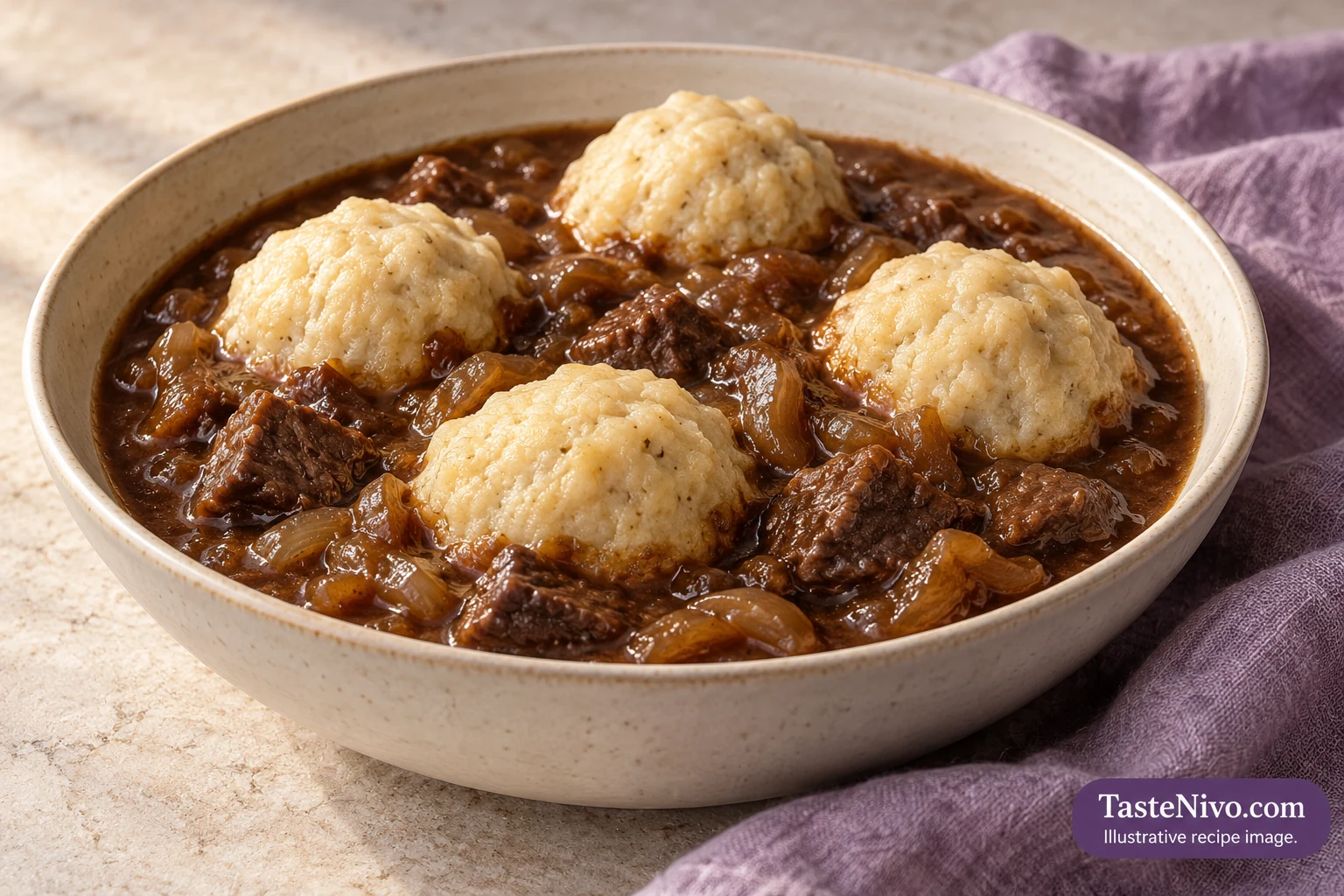
- Combine dumpling flour, baking powder, suet and remaining salt. Stir in enough cold water to make a soft dough. Divide lightly into 8 balls without compressing them.
- Place dumplings on the simmering stew with space between them. Cover tightly and simmer 25 to 30 minutes without lifting the lid until dumplings are risen, cooked through and reach 74°C (165°F) in the centre. Serve 2 dumplings with each of 4 portions.
Notes
Storage: Cool leftovers in shallow containers and refrigerate within 2 hours at 4°C (40°F) or colder. Use within 2 to 3 days or freeze promptly. Reheat only the portion needed to at least 74°C (165°F), checking the centre with a food thermometer. Discard reheated leftovers that remain uneaten.
Metric weights are primary. 1 tbsp = 15 mL; 1 tsp = 5 mL. Times are estimates; follow the texture and doneness cues in the instructions.
Scaling: Scale method quantities with the ingredient multiplier. Use extra pans or batches as needed; keep piece sizes and temperatures unchanged. Cooking times do not scale directly.