Ingredients
Equipment
Method
- Heat oven to 180°C (350°F). Grease and line the base of a 20 cm round cake tin. Beat whole eggs and 60 g sugar for 5 to 7 minutes until thick and pale. Fold in flour gently, then fold in butter and vanilla. Spread in the tin and bake for 15 to 20 minutes until springy and a skewer comes out clean. Cool completely on a rack, allowing about 60 minutes.
- Line an approximately 18 cm-wide bowl with food-safe plastic wrap. Pack in the softened ice cream firmly without melting it, smooth the top, cover and freeze for at least 4 hours until hard. The cake must be wider than the ice-cream dome.
- Put egg whites, 200 g sugar and cream of tartar in a clean heatproof bowl over gently simmering water, without the bowl touching the water. Whisk continuously until the sugar dissolves and the mixture reaches 74°C (165°F). Remove from heat and beat until stiff, glossy and cool enough that the bowl no longer feels warm.
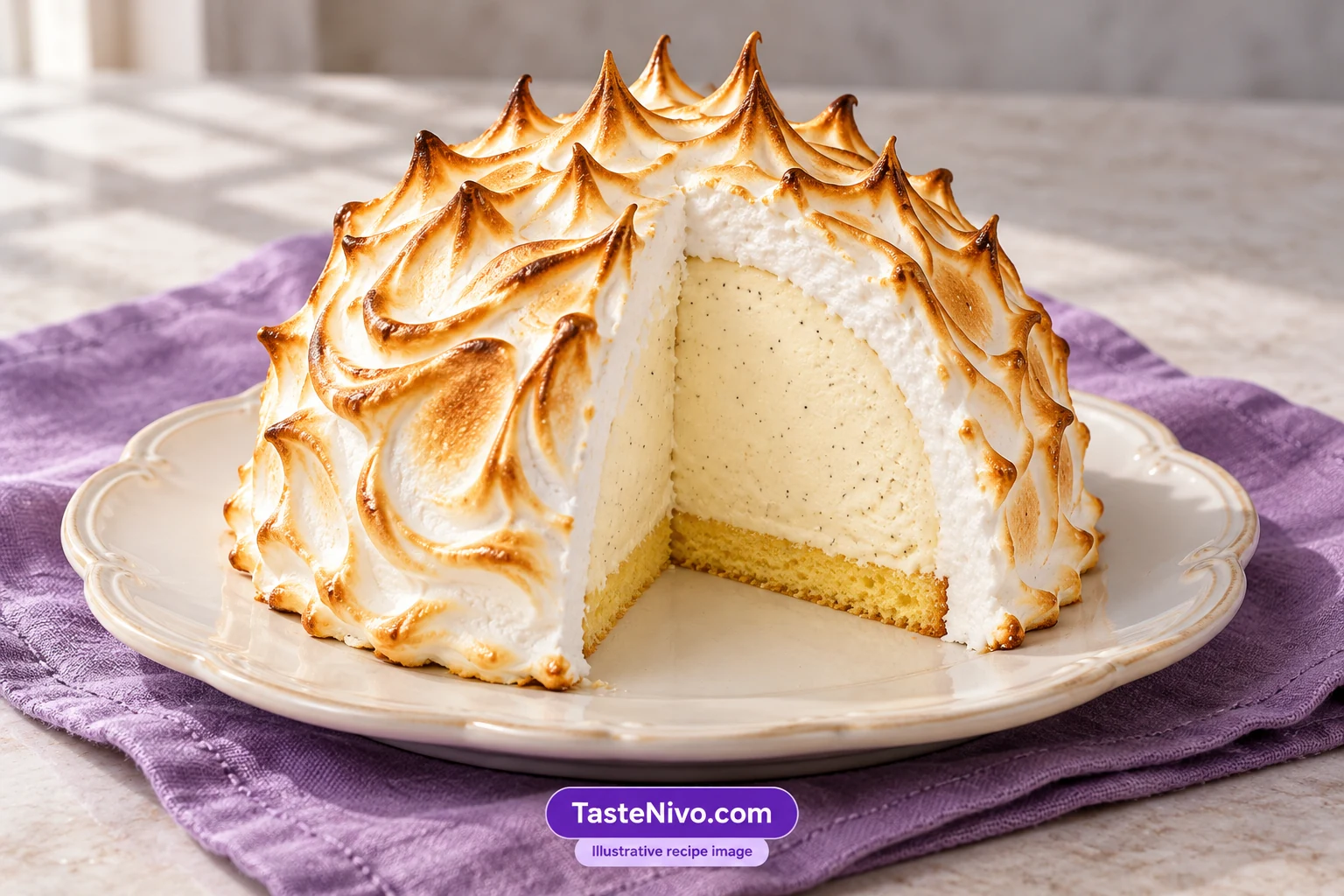
- Put the cooled cake on a parchment-lined metal baking sheet. Unmould the frozen ice cream onto the cake and remove all plastic wrap. Cover the dome and cake edge completely with a thick, even layer of meringue, about 2 cm deep, leaving no exposed ice cream. Form peaks with a spoon.
- Freeze the covered dessert for at least 30 minutes while heating oven to 230°C (450°F). Bake directly from the freezer for 3 to 5 minutes, watching constantly, just until the meringue peaks are golden. Do not prolong baking to darken every part of the surface.
- Slide carefully onto a serving plate, cut into 8 slices and serve at once. The meringue is already cooked; the final oven step only colours it. Have serving plates ready before the dessert goes into the oven.
Notes
Storage: Keep the cake and ice-cream dome frozen until assembly. The fully covered, unbrowned dessert can be held in the freezer for up to 1 day, protected from freezer odours. Brown just before serving. Do not refreeze ice cream that has melted completely.
Metric weights are primary. 1 tbsp = 15 mL; 1 tsp = 5 mL. Times are estimates; follow the texture and doneness cues in the instructions.
Scaling: The serving controls scale the ingredient list. Any quantities written in the method describe the base batch; adjust those quantities by the same factor. Keep piece sizes and cooking temperatures unchanged, use extra pans or cook in batches as needed, and check doneness rather than multiplying the cooking time.