Halibut Parcels with Leeks and Lemon
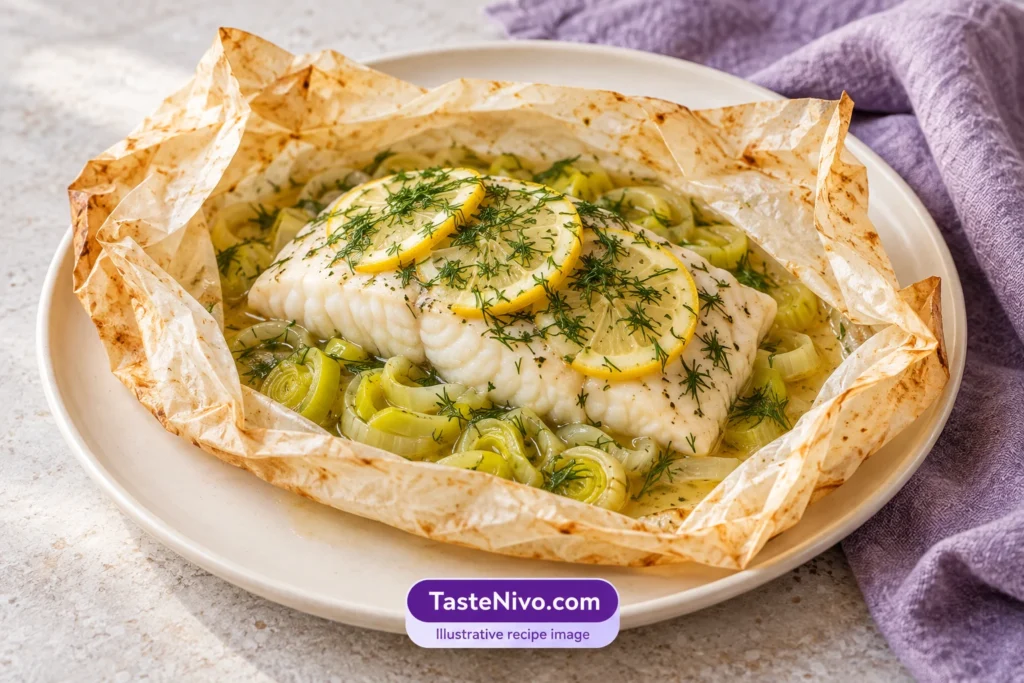
Halibut steams gently inside parchment parcels with softened leeks, lemon and dill. Open the parcels carefully to release steam and check the thickest part of each fillet before serving.
Rather eat it out? See restaurants near you that serve halibut parcels.
📍 Find it near me ↗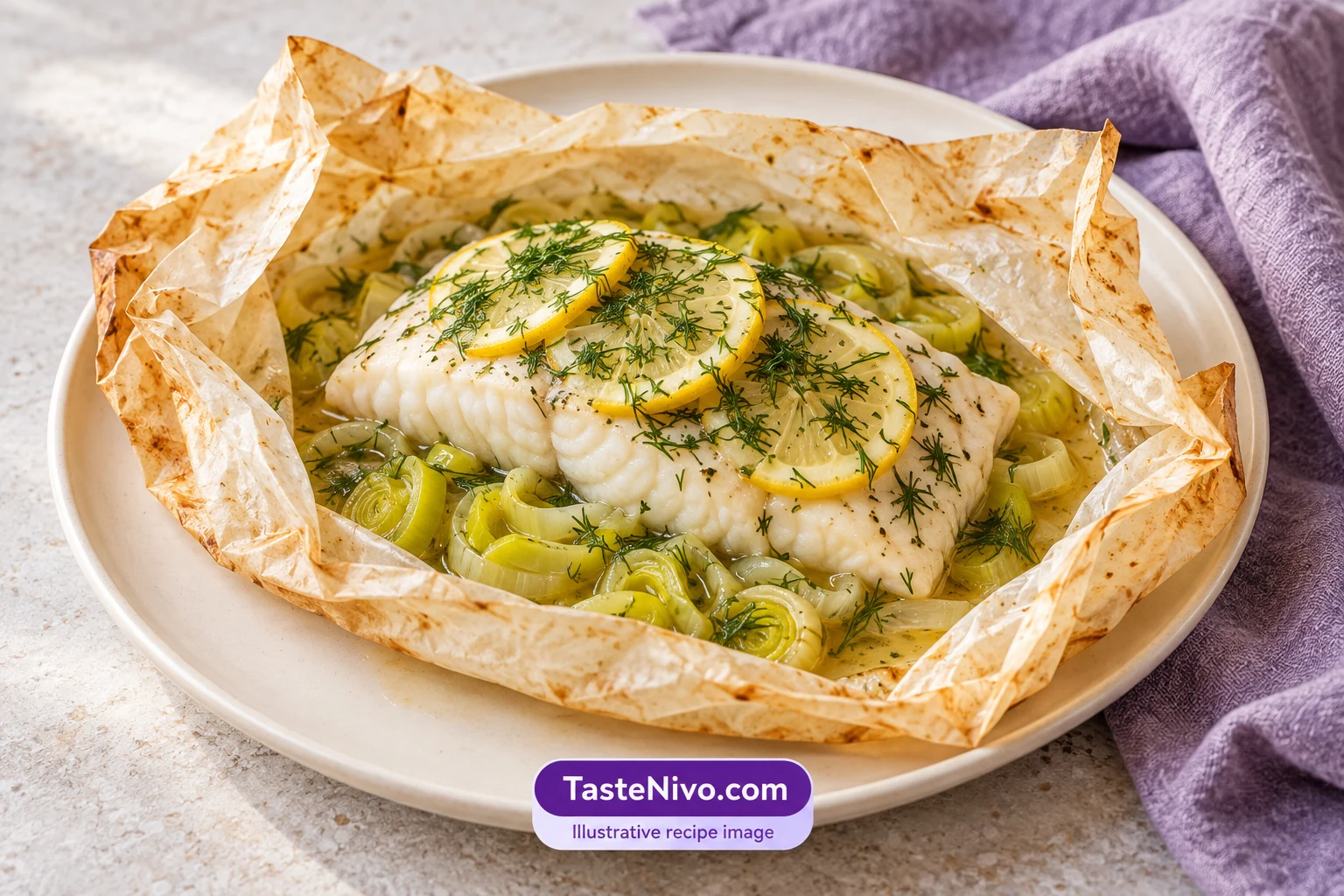
Halibut Parcels with Leeks and Lemon
Ingredients
Equipment
Method
- Heat the oven to 200°C (400°F). Cut 4 large sheets of baking parchment, about 35 x 40 cm. Rinse the sliced leeks thoroughly to remove grit and drain.
- Melt the butter in a frying pan over medium-low heat. Add the leeks, 30 mL water and half the salt. Cover and cook for 8 to 10 minutes until softened, stirring once.
- Divide the leeks among one half of each parchment sheet, leaving a wide border. Set a halibut fillet on top. Add the remaining salt, pepper, dill, lemon slices and a small share of the remaining 30 mL water to each.
- Fold the parchment over the fish and crimp the edges in a series of overlapping folds to seal. Place the parcels on a rimmed baking tray.
- Bake for about 15 to 18 minutes. Open one edge carefully away from your face and check the thickest part of every fillet reaches 70°C (158°F). Reclose and return any under-temperature parcel to the oven for a few minutes before checking again.
- Place each parcel on a plate and open carefully to release steam. Serve the fish with the leeks and cooking juices, removing lemon slices if desired.
Notes
MAKE THE MEAL YOURS
Shopping & recipe cost
Shopping list & recipe cost
Planning for 4 servings.
Change yield with the recipe card controls ↑. This planner follows those controls. Quantities written in the method describe the original batch; adjust them too. Cooking time does not multiply.
Tick ingredients you already have to leave them off the shopping list. Ingredient costs still include them. Enter your own pack prices in CAD; no store prices are fetched.
Enter pack prices and amounts to estimate the ingredient cost.
Use the same unit and preparation for pack amount and amount used. For drained ingredients, use the usable drained pack amount. Changing between weight and volume requires your own measured quantity. Excludes energy, travel, taxes, sides and extra ingredients mentioned only in notes.
Prefer to eat out?
No menu-verified restaurant match is recorded for this recipe yet. Browse the restaurant guide.
Saved recipes & shopping list → Meals with shared ingredients →
Recipe by TasteNivo. See our editorial method for recipe preparation and illustrative image notes.
KEEP EXPLORING
Fish and seafood dishes
Browse the Fish & Seafood collection, or try:
For the equipment used in this kind of cooking, see Oven mitts.