Fluffy pancakes need a batter that can expand and a pan hot enough to set it without burning the outside. Beating harder, adding extra flour or turning the heat up rarely fixes all three problems.
Use this guide with a recipe written for thick, baking-powder or baking-soda pancakes. Crêpes, yeast pancakes and thin styles have different textures and methods. The aim is a soft centre with an evenly coloured surface, not maximum height at any cost.
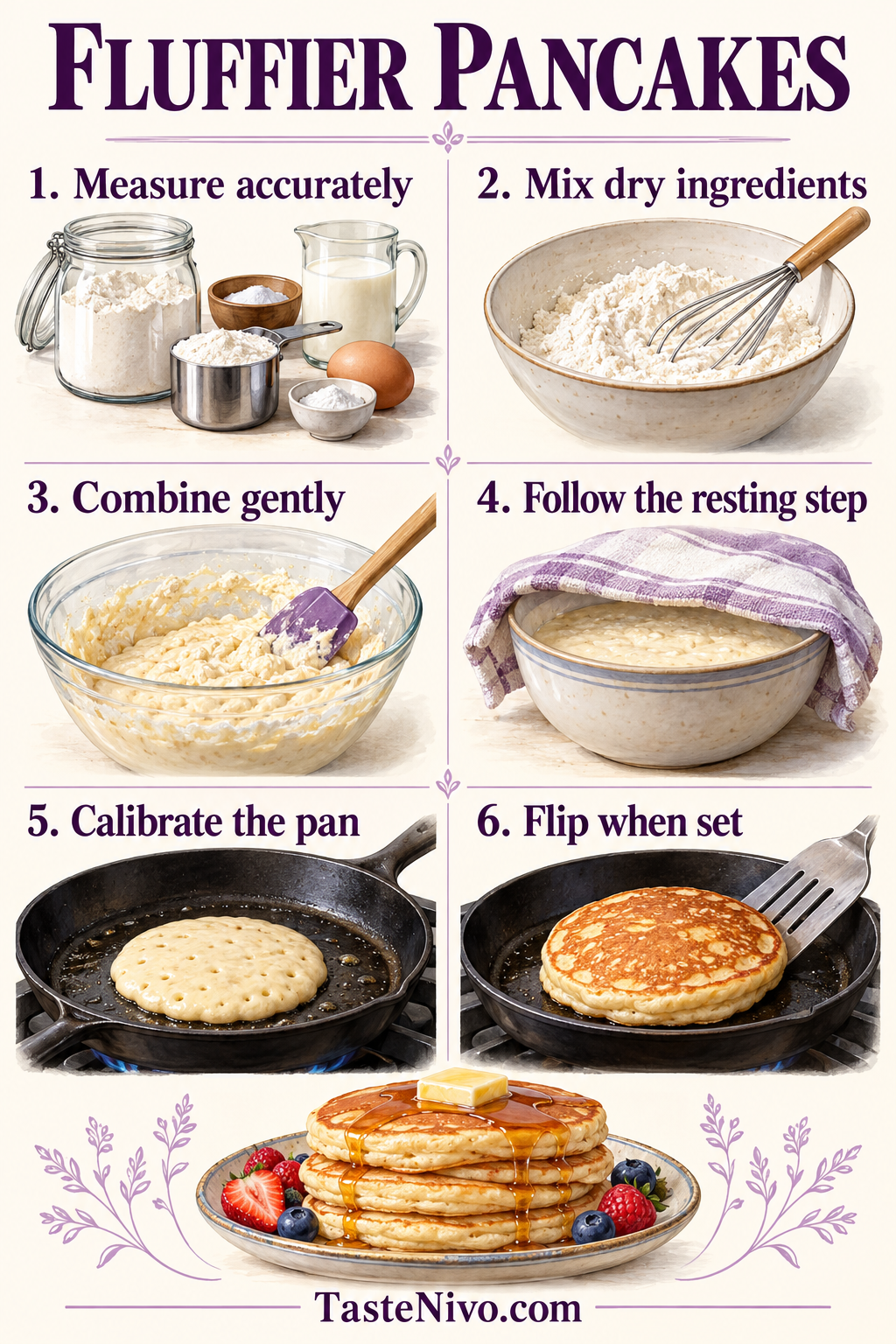
Start with a balanced recipe
Baking powder and baking soda are not interchangeable spoon for spoon. Baking soda depends on the surrounding ingredients for its effect; changing an acidic ingredient can alter the result. Use a recipe designed for the ingredients you have rather than making several substitutions together.
Check that the raising agent is in date and has been stored as directed. Increasing an uncertain product’s quantity is not a reliable substitute for using one that performs as expected.
Mix dry and wet ingredients separately
Distribute flour, salt and raising agents through the dry mixture before combining. In another bowl, mix the eggs, liquid and any melted fat as the recipe directs.
Allow very hot melted butter to cool appropriately before it meets the eggs. Add it in the sequence the recipe specifies. A mixture with clumps of raising agent or poorly combined eggs may cook unevenly from pancake to pancake.
Prepare toppings and the serving area now. Once the first pancake hits the pan, the cooking sequence moves quickly.
Stop mixing before the batter becomes perfectly smooth
Fold wet and dry ingredients together just until no substantial pockets of dry flour remain. Small lumps are often acceptable in this style of batter.
Vigorous extended mixing develops the flour mixture differently and can produce a tougher texture. Trying to remove every tiny lump may do more harm than leaving a slightly uneven appearance.
Scrape the bottom of the bowl, where dry flour can hide. Then stop. Do not continue beating merely because the surface does not resemble a completely smooth cake batter.
Judge thickness after any specified rest
Some recipes include a short batter rest. Follow it rather than assuming that a thin-looking mixture needs immediate extra flour. Flour takes up liquid over time, and the batter may thicken.
A thick pancake batter should spread somewhat after being portioned, not sit as an immovable lump or run across the entire pan. If adjustment is necessary, add a small amount of the recipe’s liquid and reassess.
A rest is not universal. Some batters should be cooked promptly after mixing, so the specific recipe takes priority over a general waiting rule.
Use the first pancake to calibrate the pan
Heat a suitable frying pan or griddle over moderate heat. Grease lightly as the recipe requires, avoiding pools that fry the edges before the middle sets.
Portion one pancake first. If the underside becomes dark while the top remains very wet, reduce the heat. If it stays pale for a long time and spreads excessively, check both the pan temperature and batter consistency.
Wait for the pan to respond after adjusting the burner. Turning the control does not immediately change the temperature of a heavy griddle.
Flip once the structure can support it
Look for edges that appear more set and bubbles that open on the surface, together with a golden underside. Different batters show bubbles differently, so do not use them as the only signal.
Slide a broad spatula underneath and turn gently. Repeated early flipping can tear a pancake before its structure sets. Pressing it flat after turning compresses the texture you are trying to retain.
Cook the second side until the centre has set. If thicker pancakes remain wet inside, lower the heat and allow more time rather than darkening the outside further.
Keep batches consistent
Use the same scoop or ladle for each pancake. Similar sizes make the cooking rhythm easier to repeat. Re-grease lightly when needed and remove dark crumbs between batches.
The pan may become hotter as the session continues. Reassess colour rather than assuming the setting that worked for the first pancake will remain perfect.
Avoid stacking a large pile immediately if you want drier edges. Warm toppings separately so that serving does not require a long wait after cooking.
Troubleshooting the batch
| Problem | What to investigate | Practical adjustment |
|---|---|---|
| Dark outside, wet centre | Excess heat or very thick portions | Lower heat and use manageable portions |
| Tough texture | Extended mixing | Fold briefly in the next batch |
| Flat, dense pancakes | Raising agent, substitutions or thin batter | Check the recipe and product first |
| Uneven dark patches | Oil pools or pan hot spots | Wipe to a thin film and reposition |
| Torn pancakes | Turning before the surface sets | Wait for edge and underside cues |
A short pre-cook checklist
- Read the recipe’s resting instruction.
- Mix the dry ingredients evenly.
- Leave small batter lumps alone.
- Cook one calibration pancake.
- Adjust heat as the pan warms through.
- Avoid pressing after flipping.
Can I add more baking powder for extra height?
More is not automatically better and can change flavour and structure. Start with a balanced recipe and correct mixing or heat problems before changing the raising agent.
Why does the second batch brown faster?
The pan may have accumulated heat. Reduce the burner slightly and give it time to respond. Batter also changes as it stands, so check both pan temperature and consistency.
Use portion size as a cooking control
A larger scoop makes a thicker pancake unless the batter spreads more. Its centre needs more time to set, which changes the heat setting that works well.
If your first pancake browns before the centre cooks, try a manageable portion and a gentler pan rather than immediately thinning the entire bowl. The batter may be correct for the recipe but too deep for your chosen size.
Use the same ladle or scoop for the next few pancakes. Consistent portions make it easier to learn the pan’s rhythm and identify whether the result changes because of heat or batter.
For a different presentation, such as small pancakes, expect a different cooking pattern. Their smaller centres can set faster, so begin checking earlier rather than applying the original visual timetable without observation.
A worked example: the first pancake is dark underneath
Lift it carefully and inspect both surfaces. If the underside is dark while the top still looks very wet, the pan is transferring heat faster than the centre can set.
Reduce the burner and allow the pan time to respond. A heavy pan retains heat, so the next pancake can still darken quickly if added immediately after turning the control.
Check the fat layer as well. Pools of oil can fry isolated areas and create patchy colour. Wipe or spread to the thin coating specified by the recipe, using a method suitable for the hot pan.
Cook another single test portion. Do not fill the whole griddle until the adjustment has produced a more balanced result. One calibration pancake uses less batter than a full batch that repeats the same problem.
A worked example: the pancakes are pale and flat
First ask whether the batter spread unusually far. If it flowed almost like a thin crêpe mixture, review the liquid measurement and flour quantity.
If the consistency looked correct but the surface stayed pale for a long time, check whether the pan was adequately heated. Increase gently and give it time to stabilise before testing again.
If the pancakes remain dense despite a suitable pan and consistent batter, review the raising agent, substitutions and mixing. A recipe with baking soda may depend on an acidic ingredient that was changed.
Do not add large quantities of flour and baking powder at the same time. You may create a new batter without identifying the original cause. Make one small, reasoned correction or use the observation to improve the next measured batch.
A worked example: thick pancakes with wet centres
A deeply thick portion may need lower heat and more time than a shallow one. Increasing the burner can make the outside darker without resolving the middle.
Check whether the recipe intentionally produces very thick pancakes or whether the batter was made stiffer by adding flour. A mound that barely spreads may no longer match the intended method.
If a recipe specifies a lid or another particular finishing technique, follow that complete approach. Do not assume every pancake style should be cooked exactly like a thin griddle pancake.
For a standard batch, try a smaller scoop and moderate heat. Test the centre of the calibration pancake before repeating the size across the rest of the bowl.
Adding berries, chocolate or other inclusions
Extra ingredients change the surface and moisture pattern. A piece of fruit can create a wetter pocket, while chocolate touching the pan can colour or stick differently from plain batter.
Use the amount and preparation specified by the recipe. Large pieces of fruit do not distribute like small pieces, and a generous unmeasured handful may overwhelm the batter.
Some recipes fold inclusions into the bowl; others scatter them over each portion after it reaches the pan. The second approach can give more control over distribution, but follow the method intended for the batter.
If adding frozen fruit, use a recipe that accounts for it rather than assuming it behaves exactly like fresh fruit. The additional cold and moisture can change cooking around the pieces.
Why pressing and repeated flipping work against the texture
Pressing with the spatula compresses the pancake after the structure has begun setting. It may make the surface appear flatter and more uniform while reducing the light texture you wanted.
Repeated flipping can also make a fragile pancake harder to handle. Before the first side has set, the middle may not support its own weight across the spatula.
Use a broad spatula and turn with a controlled motion. Slide it far enough underneath that one edge is not left hanging and tearing.
Once turned, let the second side cook. Adjust the heat if needed, but avoid treating constant handling as a substitute for a suitable pan temperature and portion size.
Coordinate a batch without letting the pan run away
A pan can accumulate heat over several rounds, especially when it remains empty while you plate or prepare toppings. The setting that worked at the start may become too aggressive later.
Watch the colour of each batch and reduce the burner when browning speeds up. Remove dark crumbs or burnt inclusions before adding fresh batter.
Keep a clear place for finished pancakes and arrange toppings ahead of time. If the recipe suggests a holding method, follow it rather than improvising a tightly covered, deep stack that traps a lot of steam.
The aim is a consistent sequence: portion, observe, turn, finish and remove. Long interruptions between rounds make both pan temperature and batter changes harder to interpret.
Substitutions need more than a matching volume
Replacing milk with a different liquid can change flavour, acidity and thickness. Replacing butter with oil changes how the batter is mixed and how it behaves.
Likewise, changing flour type can alter absorption and structure. A direct cup-for-cup replacement is not guaranteed to preserve the intended pancake.
Choose a recipe written for the ingredients you need when possible. If you make one substitution, record it and keep the rest of the method stable.
Do not judge the revised batter entirely by the original photograph. Use a test pancake to assess spread, centre texture and colour before committing the full batch.
A practical mixing-and-cooking sequence
Begin by measuring everything and setting out the pan, scoop, spatula and serving dishes. Combine the dry ingredients thoroughly so that the raising agent is distributed.
Mix the wet ingredients as directed, then bring the two mixtures together briefly. Scrape the base of the bowl so that dry flour does not remain hidden.
Follow any resting instruction while bringing the pan to a suitable temperature. Cook one test portion and adjust from its actual result.
Continue with consistent scoops, reassessing the heat as the pan warms through. This sequence prevents several common errors without requiring a special appliance or a perfectly smooth batter.
Can I whisk the batter again halfway through?
A gentle fold may redistribute ingredients if necessary, but repeated vigorous whisking changes the batter. Avoid treating every rest period as a reason to beat it smooth again.
Why do my pancakes have irregular edges?
Batter consistency, inclusions and how the portion is poured all affect the outline. Irregular edges alone do not indicate poor texture. Judge the centre and overall cook before adding flour for appearance.
Can I cook a much larger batch on several pans?
Yes, if you can monitor each pan independently. Different pans can require different heat settings. Start small and avoid assuming that the same burner position produces identical surface temperatures on every pan.
Related kitchen guides
Put this guide to use
Browse Breakfast & Brunch for recipes that use this equipment or related techniques. Useful examples to read alongside this guide: Apple and Cinnamon Ricotta Pancakes · Apple and Poppy Seed Breakfast Pancakes · Whole Wheat Blueberry Pancakes. Check each recipe for its particular method and batch size.